The High Level Scientific Fellowship Award
As part of a program to facilitate and strengthen scientific collaborations between researchers in France and Canada, the Embassy of France in Canada, in partnership with Campus France, have set up the High Level Scientific Fellowship Award. This award offers Canadian PhD students or postdoctoral researchers funding for a 2-month research stay in France.
Through this program, the IIES has had the opportunity to further strengthen the relationship between Trent University and the University of Toulon, an IIES member and host of the 10th Annual IIES Science & Policy Workshop. This prestigious scholarship has been awarded to PhD Student, Minh Thao Nguyen Duong, who will be working with Professor Stéphane Mounier at the University of Toulon.
Meet High Level Scientific Fellow: Minh Duong
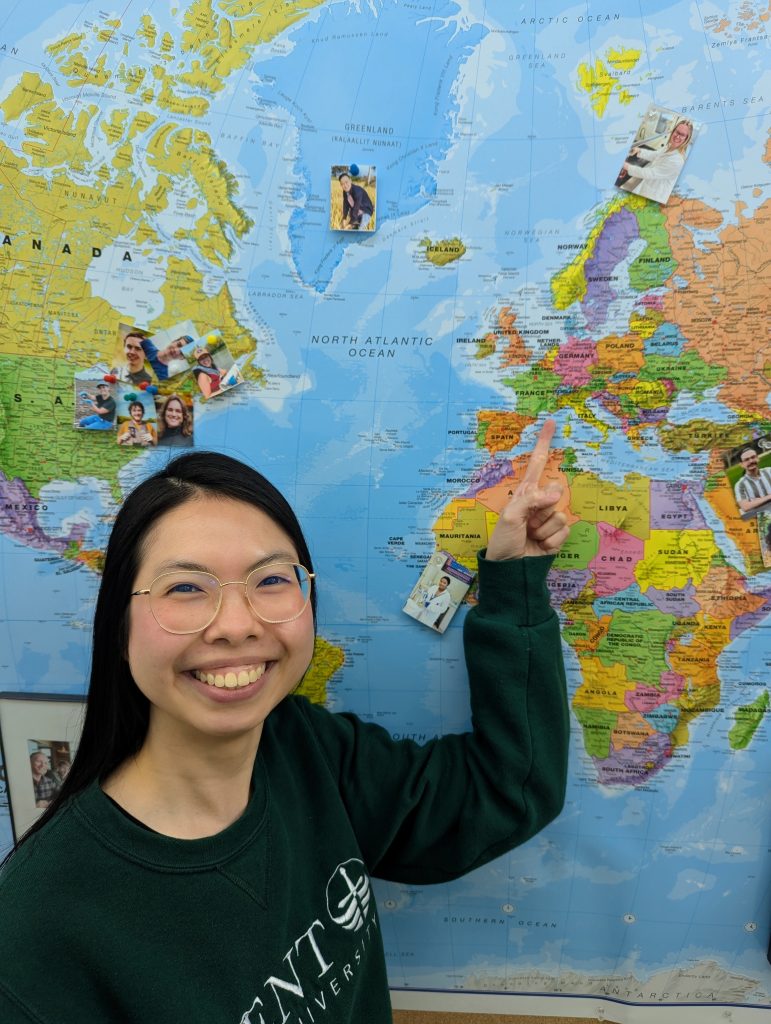
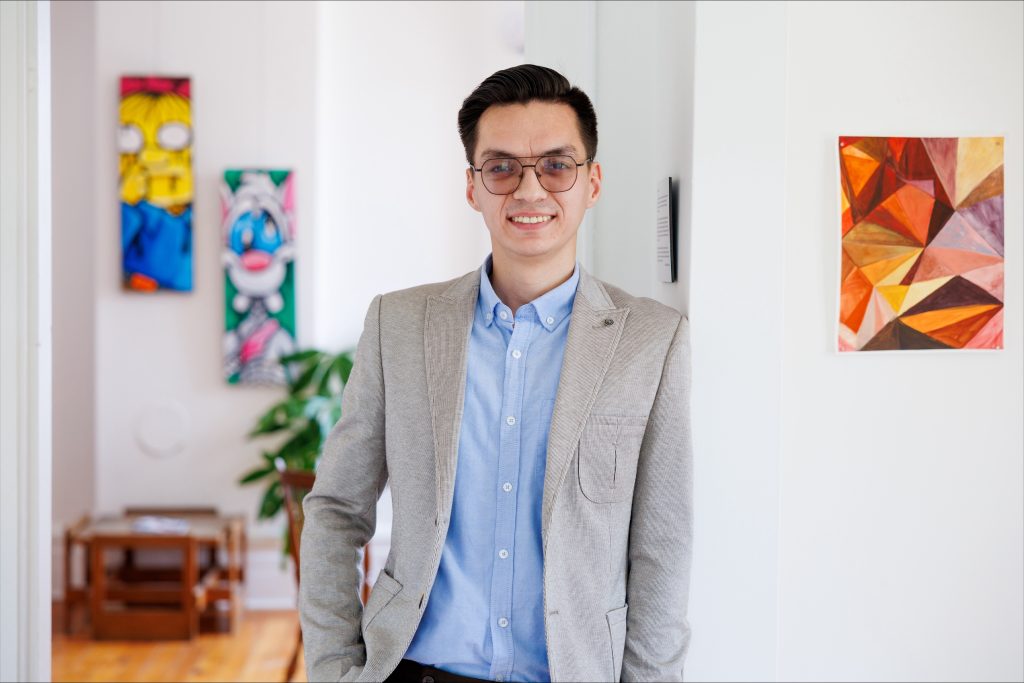
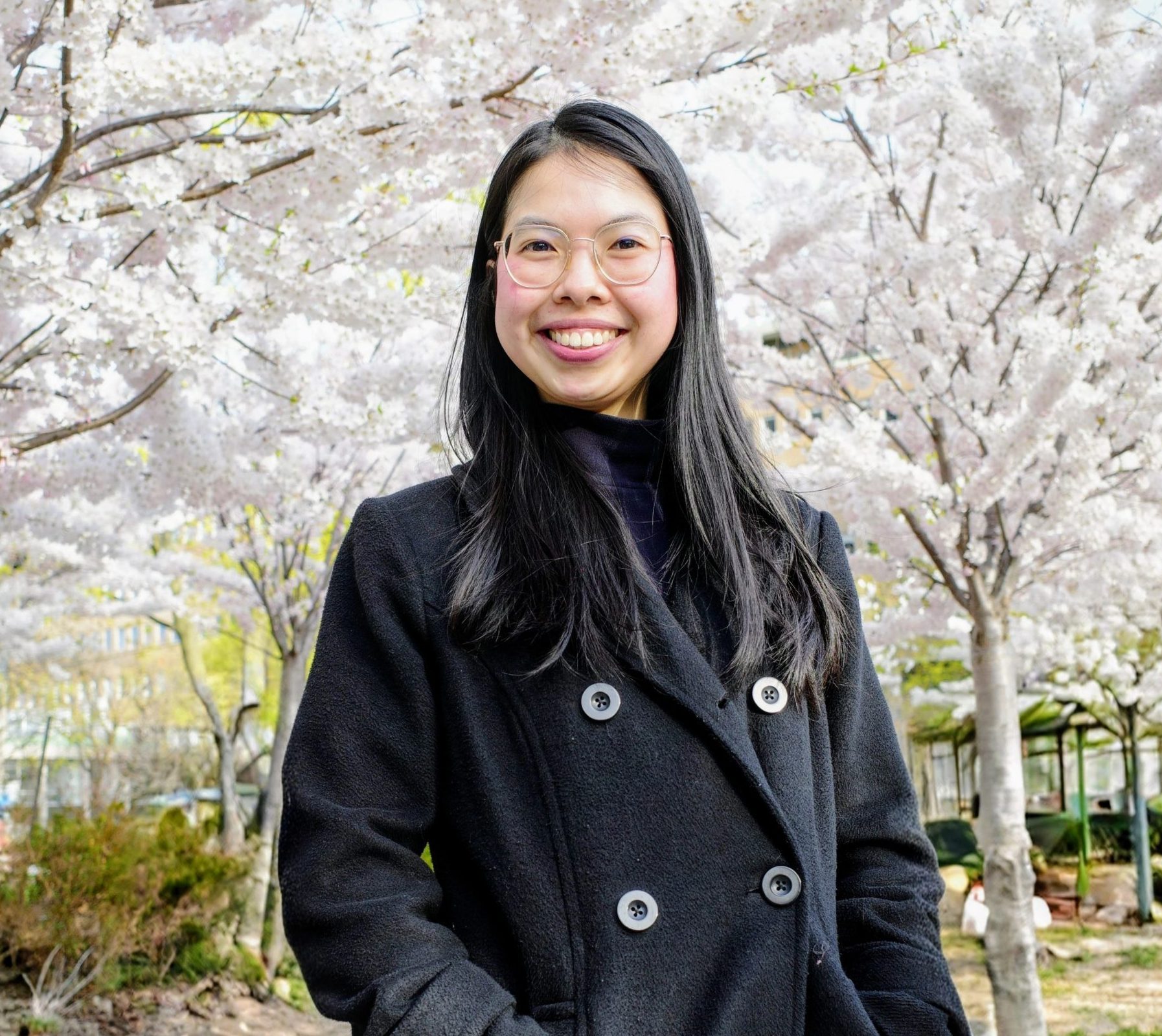
Image: Minh Duong, Trent PhD Student & winner of the High Level Scientific Fellowship Award.
Tell us about yourself.
“My name is Minh Duong, and I am a Ph.D. candidate in the Environmental and Life Sciences program at Trent University. I completed my undergraduate studies here in 2021. During the final summer of my degree, I had the opportunity to do a placement at the EnIGMA Lab (Environmental Isotope Geochemistry and Mass Spectrometry Applications)[with Professor Huy Dang]. The experience was transformative, it deepened my passion for environmental science and inspired me to pursue graduate studies at a more advanced level the following winter.
For my Ph.D project, I am investigating the geochemistry of rare earth elements (REEs), critical minerals that are vital to emerging technologies and the global transition to green energy. I am exploring the potential to safely repurpose lower-value REEs by using REEs as a fertilizer for crops. My ultimate goal is to better understand the complex interactions and potential impacts of these elements on the ecosystems and human health, ensuring that any expanded use remains environmentally responsible.”
Tell us about the work you will be doing.
“I am truly honored to have been selected for the High-Level Scientific Fellowship, awarded by the Embassy of France in Canada and Campus France. I will be joining the Chemistry of Marine Environments team at the Mediterranean Institute of Oceanology (MIO) in Toulon, France. There, I will work under the supervision of Dr. Stéphane Mounier from the University of Toulon.
My project in France focuses on rare earth elements in the marine environment. Although REEs are critical for green technologies, there are currently no environmental quality guidelines for these elements, despite growing anthropogenic emissions throughout their lifecycle, from mining to recycling. This work builds on previous research that revealed widespread REE contamination in coastal watersheds and Toulon Bay. I will conduct a detailed investigation to precisely identify and quantify the main sources of REE emissions entering the bay, including river and groundwater discharges, surface runoff, atmospheric deposition, and wastewater effluents. By constraining these sources, we can better mitigate contamination.”
What motivated you to apply for this fellowship?
“The best way to learn is through direct experience, and I was eager to immerse myself in a new environment to gain new perspectives. I have long been fascinated by the French language and culture, but I had never visited France. On a personal level, growing up, I often heard my grandparents speaking French, and my parents often shared stories about the French culture. These connections made the idea of being in France feel both exciting and deeply meaningful. This fellowship offered the perfect opportunity to live and work there for two months, an experience far more worthwhile than anything I could gain from afar. Professionally, my PhD research has been primarily lab-based.”
“I saw this fellowship as a valuable chance to step outside my comfort zone and challenge myself with hands-on field sampling in a marine environment, specifically in the ocean. Combining cultural immersion with new scientific skills in oceanography and marine geochemistry made this opportunity uniquely compelling.”
Have you had other similar experiences conducting research abroad? Can you speak to the importance of international collaborations and experiences abroad for students and academics?
“Yes, I have been fortunate to participate in international collaborations before. In 2023, I joined an interdisciplinary team of eight researchers from Trent University, Ho Chi Minh University of Technology (HCMUT), and Université Grenoble-Alpes for a field trip in southern Vietnam where I helped facilitate knowledge-sharing sessions on water sampling techniques in Can Gio mangrove, a critical ecosystem for biodiversity. In 2024, I expanded my contribution to the eight-day field trip in Vietnam, uniting 16 researchers from Trent University, the University of Edinburgh, Laval University, the Institut national de la recherche scientifique, HCMUT, and Phenikaa University. The trip focused on the life cycle of REEs, emphasizing sustainable development and reconciliation with Indigenous communities. These experiences deepened my understanding of the socio-economic and environmental complexities of international policy and reinforced my commitment to inclusive, cross-border environmental strategies for the critical mineral sector.”
“Working across borders fosters innovation by combining complementary expertise, building global networks that lead to long-term partnerships, and preparing researchers to tackle complex environmental issues that transcend national boundaries. For students especially, these opportunities accelerate personal and professional growth, pushing us beyond our comfort zones, developing adaptability and intercultural skills, and giving us a more nuanced understanding of how science informs real-world policy and sustainability solutions.”
What do you believe made your application stand out?
“I believe three key strengths made my application stand out in the High-Level Scientific Fellowship application.
First, the clear relevance and timeliness of my research. My project builds directly on existing work in Toulon Bay and tackles a pressing global issue at the intersection of critical minerals, marine ecosystems, and sustainability. Second, my proven track record of international and interdisciplinary collaboration, which enables me to work effectively in multicultural teams and adapt to new research environments. The experiences are valuable for a stay abroad. Third, my genuine personal motivation. My connection to the French language and culture, paired with a deliberate desire to move from purely lab-based work into hands-on marine field sampling, showed genuine enthusiasm. Together, the scientific relevance, collaborative experience, and authentic motivation created a well-rounded application that I believe demonstrated to the committee my capability and potential for meaningful impact during the fellowship.”
What are you most excited to learn or experience while abroad?
“I am excited to immerse myself in daily French life and practice the language as much as possible, even though I still have a lot to improve on! Living in Toulon will give me the chance to experience French culture firsthand, from local markets and cuisine to the beautiful Mediterranean lifestyle.
Beyond that, I am really thrilled to gain hands-on experience with marine field sampling in the Mediterranean Sea and to deepen my understanding of how rare earth elements behave in a coastal marine ecosystem. I am looking forward to learning directly from Dr. Stéphane Mounier and the Chemistry of Marine Environments team, engaging in stimulating discussions that broaden my scientific perspective, and building new friendships along the way.”
To learn more about the research Minh and her colleagues at Trent University & the University of Toulon are conducting, visit the EnIGMA Lab and MIO-CEM Lab websites.