The Conference that became a journey: a nexus of research, society and dreams at the 10th IIES Workshop & Graduate Student Forum in France

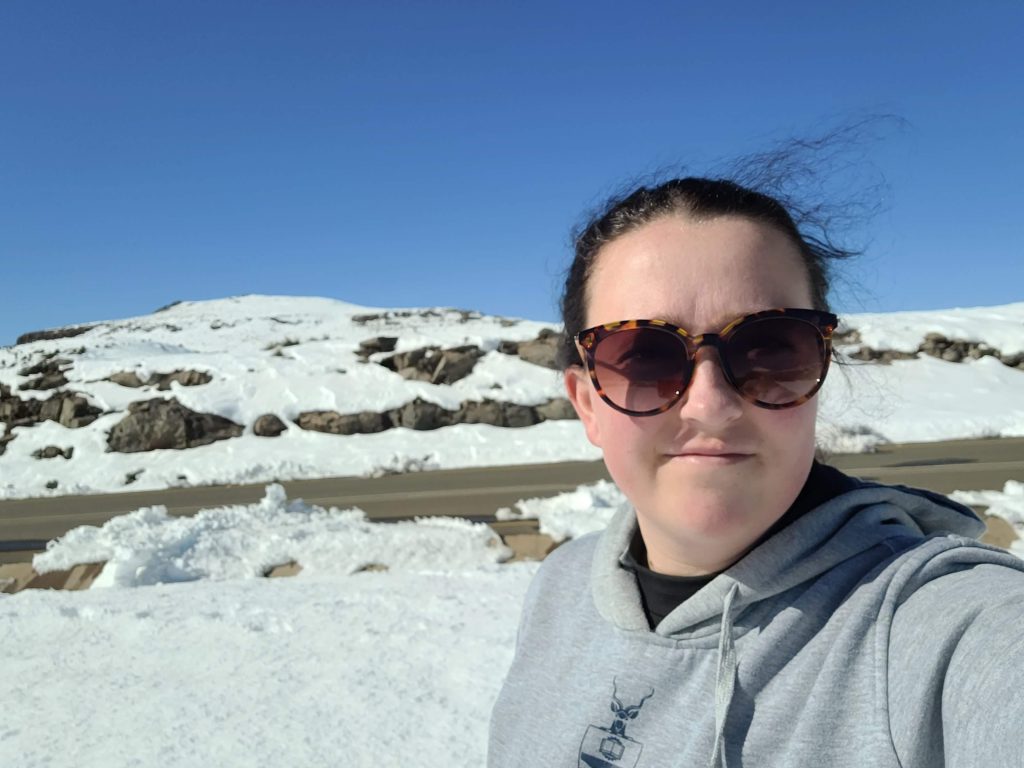
Grace Kadyamadare at Mont Faron

Student Perspective

By: Grace Kadyamadare, Ph.D. Candidate | University of the Witwatersrand, South Africa

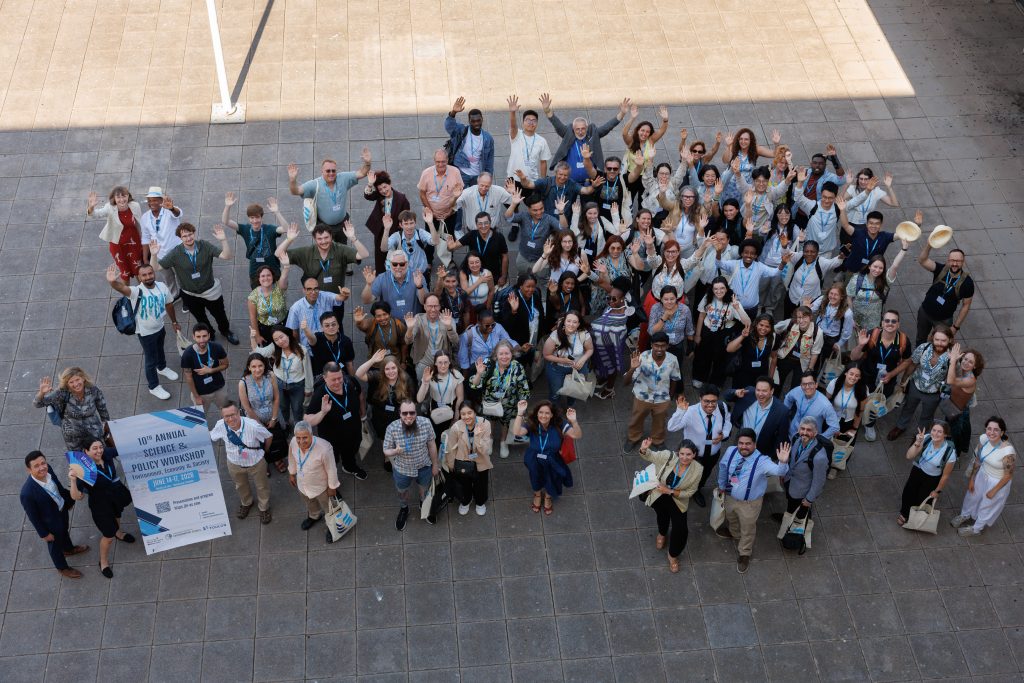
France has always been one of the countries I dreamed of visiting. When I received news that the 10th Annual International Institute of Environmental Sciences (IIES) Science and Policy Workshop would be held in Toulon in France, I knew I had to seize the opportunity to attend. As a PhD geographer and emerging early-career researcher, I enjoyed the journey from Johannesburg through Doha and Nice to Toulon, looking forward to the week’s enticing schedule.

Research has a remarkable way of opening doors you never knew existed.

Where Research and people’s knowledge meet

Standing before a diverse audience of students, professors, and researchers, I presented some of my research findings titled “Reconceptualising illegal waste dumping in the ‘dump that calls’ representational spaces in the Mbekweni Township, Paarl”. My presentation challenged the conventional framing of waste deposited outside formally designated collection systems as simply illegal dumping. Drawing on part of my doctoral research in Mbekweni, a historically marginalised township in South Africa, I explored how residents’ everyday waste practices are shaped by unequal access to waste services, the organisation of urban space, and lived experiences of municipal service delivery. Using critical ethnography and Lefebvre’s production of space, I reconceptualised these practices as informal disposal and introduced the concept of the “dump that calls” as a space where discarded waste becomes more than something to be removed, and whose visibility signals unmet waste service needs, with a call for municipal authorities to respond. The presentation invited us to look beyond the waste itself and ask a more important question: what might a dumpsite be communicating about the people, services and spaces around it?

GarceKadyamadare Image1

Image: Grace Kadyamadare at the Porte d’italie campus of the University of Toulon for the 10th Annual Science & Policy Workshop.

As Doreen Massey states, place is continually created through social interactions, migration, and economic change; this conference created a space to reconnect with new and former colleagues.

It was a pleasure to meet students and research fellows whom I had met at the South African IIES conference in 2025. As a proud Witsie, I was among five other students and one staff member from the University of the Witwatersrand, some of whom I had met at various conferences.  Over and above that, meeting other students from other universities such as TrentEdinburgh and Toulon to name a few, for the second time and recalling how our research journeys had progressed was enlightening and engaging. It was good news to hear that Audrey had completed her doctoral studies and was now a research fellow at the University of Edinburgh. In addition, I connected with Toyin from the University of Montreal, who shared her article on conducting a systematic review that is shaping the current article I am working on. Furthermore, we got opportunities to reminisce over past presentations and adventures in South Africa.

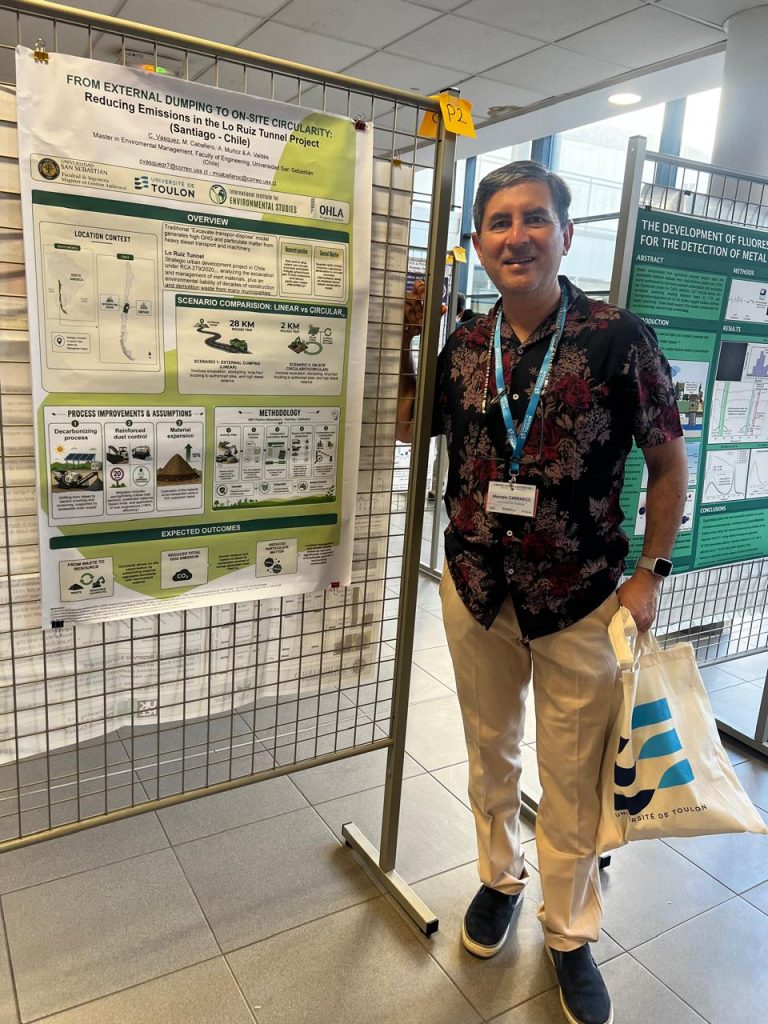
Apart from the student presentations, during the tea breaks where I had lots of real croissants and juice, I took time to engage with the student posters. I was lucky to chat with Lucy Martin-Johnson from Trent University. Her poster was fascinating, as she had made it on cloth rather than the usual paper. During our interaction, she explained how her Masters’ research investigated how native Ontario meadow plants compete with and suppress the invasive creeping thistle (Cirsium arvense), examining where functional similarity, functional diversity and particular plant traits influence competitive success. 

Lucy Martin-Johnson with her poster at the 10th Annual Science & Policy Workshop

Image: Lucy Martin-Johnson with her unique poster at the University of Toulon for the 10th Annual Science & Policy Workshop.

This study reflected the IIES conference’s emphasis on translating environmental science into practical sustainability solutions.

Through examining how native plant traits can suppress invasive species, Lucy’s research demonstrated how ecological knowledge can inform biodiversity conservation and ecosystem restoration decisions. This was in contrast to my research, which addressed environmental sustainability through waste governance, community practices and socio-spatial processes. Although I never got to meet the presenters of another poster, I enjoyed the microplastics poster by Hongjian Li, Chao Wang and Cheng Gu from Nanjing University which showed how technological advances in detection can provide evidence needed to understand, monitor and ultimately manage emergent pollutants.

The presentations were only one part of the learning experience. I was spoilt for choice among the plenary speaker sessions, as they were centred on the conference’s themes of Environment, Economy and Society. Two of these presentations that resonated with my interests and research were by Diana Charyyeva and Prof. Soledad Garcia Ferrera. Diana’s presentation highlighted how Central Asia’s five countries are deeply interconnected through shared water and energy systems, as the region was warming up faster than the global average and experiencing more frequent heat extremes and droughts. My key takeaway from this case was that sustainability cannot be achieved within national borders alone, as shared resources require shared responsibility, cooperation and long-term regional planning. The presentation by Prof. Garcia Ferrera showed that sustainable and resilient cities are more likely to emerge when communities, researchers and governmental authorities co-produce solutions that not only address immediate risks but focus on the underlying systems and power relations that create vulnerability. The new concepts of community autonomy and co-production resonated with some of my research findings. 

Together with other presentations, the conference themes continued to emerge, providing informative ways to unpack sustainable development and climate change.


Beyond the Conference room: Learning sustainability through Toulon and Porquerolles

GraceKadyamadare_Porquerolles1

Image: Grace enjoying the sunset on the beach of the Ile de Porquerolles in the south of France during the 9th Graduate Student Forum.

Toulon itself became an extension of the workshop. The planned activities around Toulon provided an interesting lens to experience the city as it was dotted with some incredible places and activities to do.

Notwithstanding the academic side, the Conference organisers had some tourist treats for us. I got to do two of the activities I have always imagined taking part in. The first was a boat cruise around the island. It was an incredible experience during which I captured many photos. The trip showcased the multiple uses of maritime spaces: ferries transporting people and goods, fishing vessels representing livelihoods, leisure boats reflecting tourism and recreation, and the cruise ship illuminating the economic importance of the Mediterranean and the city’s historic connection with the French Navy. Later in the afternoon, accompanied by several conference participants and holding a day-long bus ticket, we took the cable car up Mount Faron and experienced a completely different side of Toulon. This trip provided a spectacular bird’s-eye view of the city, harbour and Mediterranean coastline, a view which reminds us that environmental sustainability is inseparable from the ways people move through, use and experience urban and coastal spaces.

GraceKadyamadare BoatCruise

Image: View of the boats in the Mediterranean sea captured by Grace during the boat cruise in the Toulon harbour at the 10th Annual Science & Policy Workshop. 

To cap an adventure-filled day, the all-day public transport ticket became an invitation to continue exploring. I travelled beyond the immediate conference precinct, venturing as far as an out-of-town shopping mall, and enjoyed parts of Toulon that I might otherwise never have encountered. Google Maps and a translator were my constant friends as I navigated these spaces. These seemingly ordinary trips became part of my lived reality of international academic travel. They offered glimpses of everyday urban life and gave me the confidence to navigate a new place on my own.

The journey to Ile de Porquerolles provided an even more immersive encounter with sustainability. Again, a new experience, we travelled by ferry to the island for the Graduate Student Forum, where academic development was paired with experiential learning. We were introduced to a water-circuit walking trail, the Aquaman Project and the SMILO Sustainable Island Programme, which turned the island into a learning environment. Against the backdrop of the clear Mediterranean waters and striking island landscapes, ideas about sustainable islands, water, biodiversity, tourism, and the responsible use of natural resources became tangible rather than abstract. Walking around the island at sunset and exploring the coastline whilst sharing the experience with other participants provided a welcome opportunity to unwind after the science workshop’s intensity.

We also participated in a public-speaking workshop hosted by a French actor, Louis-Emmanuel Blanc. From this activity, I learnt to see fear differently as a sign that what we were doing was important. The challenge is not to eliminate fear, but to channel it into preparation, confidence and authentic communication. On the last day, I participated in the SMILO Sustainable Island Programme, which involved scenario planning of sustainable solutions to island environmental problems. Quite by chance, our group was all female. In this game, all matters pertaining to environmental solutions were not the sole decision of individual stakeholders.

Grace Kadymadare in Porquerolles

Image: Grace enjoying the warm beach on the island of Porquerolles after the Graduate Forum activities of the day; a reminder that space is experienced.
In both Toulon and Porquerolles, extreme heat provided a striking real-world backdrop to our discussions. Experiencing such intense temperatures while attending a workshop centred on climate change, biodiversity, resilience and sustainable development made these issues feel pertinent. 

To me, the heat reinforced why platforms such as the IIES Science and Policy and Graduate Student Forum are important, as climate change is not something we research and discuss only within academic spaces; its effects are increasingly encountered in the places we live, travel to and conduct our research.

My IIES experience demonstrated that some of the most meaningful learning happens when scientific conversations extend beyond the conference room and into the places and environments we encounter and explore. From engaging with sustainability and climate change to developing communication skills and exploring Toulon and Porquerolles firsthand, the trip strengthened my appreciation of the connection between research, people and place. I left France inspired to continue these conversations, build new collaborations, and contribute to research that can help shape a more sustainable future.

Finally, all this could not have been possible without the hard work and efforts of the organising committee. I extend my sincere appreciation to the IIES, the organising committee, our hosts at the University of Toulon and everyone involved in making the 2026 experience possible. Thank you for facilitating a lived experience that extended far beyond the conference room and left us with lasting memories, new connections, and renewed inspiration.

Read more stories written by students like Grace who participated in our IIES events:

You might also enjoy