The International Institute for Environmental Studies (IIES) participated in high-level discussions on climate resilience, critical minerals, research, and talent development during the historic State Visit of His Excellency Tô Lâm to Canada.
The September 2026 State Visit of His Excellency Tô Lâm, General Secretary of the Communist Party and President of Viet Nam, marked a significant development in Canada–Viet Nam relations. On September 24, both countries announced a Strategic Partnership, establishing new opportunities for collaboration in science and technology, environmental sustainability, agriculture, education, and people-to-people connections. These priorities are closely aligned with the mission and activities of the IIES.
The State Visit provided the IIES with an opportunity to showcase established research partnerships, international mobility initiatives, and scientific expertise, as well as to discuss strategies for translating shared Canada–Viet Nam priorities into meaningful actions.
Universities as partners in the new Strategic Partnership
During the Canada–Vietnam Policy Forum in Ottawa on September 24, His Excellency Tô Lâm delivered a policy address on the future of bilateral relations. Trent University President and Vice-Chancellor Cathy Bruce served as an official respondent, emphasizing the essential role of universities in advancing research, developing talent, and fostering productive international partnerships.
President Bruce highlighted Trent University’s longstanding collaboration with Vietnamese institutions through the IIES as a model partnership. She referenced joint environmental research, student and faculty mobility, and talent development programs. This acknowledgment positioned IIES partnerships within a broader bilateral framework where established scientific collaborations align with the highest priorities of the Canada–Viet Nam relationship.
Integrating Diplomacy, Research, and Next-Generation Leadership
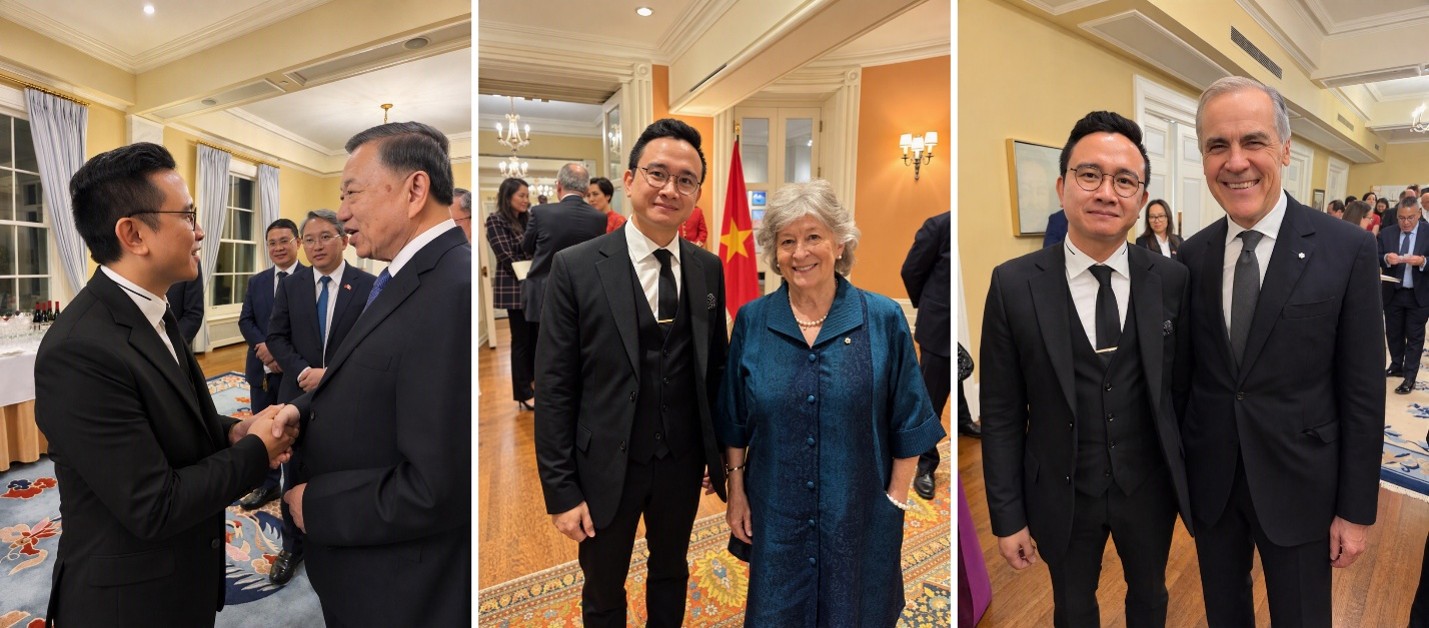
Later that evening, engagement continued at the official State Dinner at Rideau Hall in honour of His Excellency Tô Lâm. During the event, IIES co-Director Professor Huy Dang discussed the value of international research and student mobility with Prime Minister Mark Carney and the Governor General of Canada, Her Excellency Louise Arbour. He highlighted the Queen Elizabeth Scholars (QES) program and the international environmental research initiative led by the IIES at Trent University.
The venue at Rideau Hall was particularly significant, as the Queen Elizabeth Scholars program is enabled by the leadership of the Rideau Hall Foundation, in partnership with Community Foundations of Canada, Universities Canada, and Canadian universities. Through international research mobility, this initiative offers emerging scholars direct experience in addressing complex environmental challenges and fosters enduring relationships among researchers and institutions globally.
Translating Shared Priorities into Scientific and Institutional Cooperation
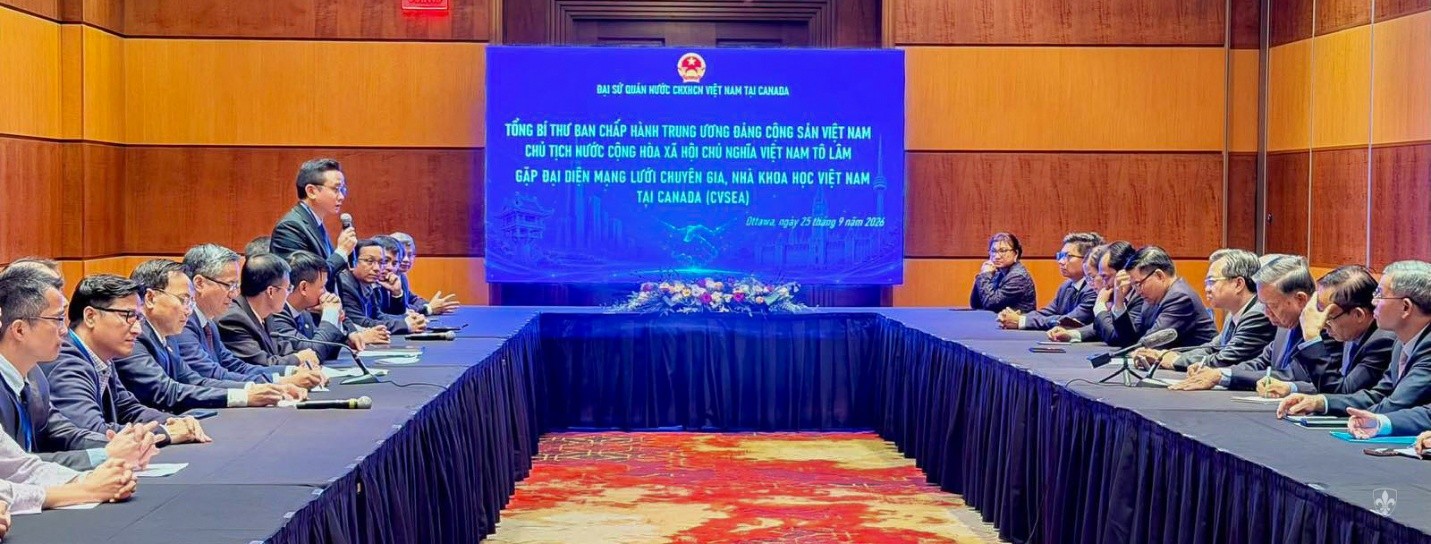
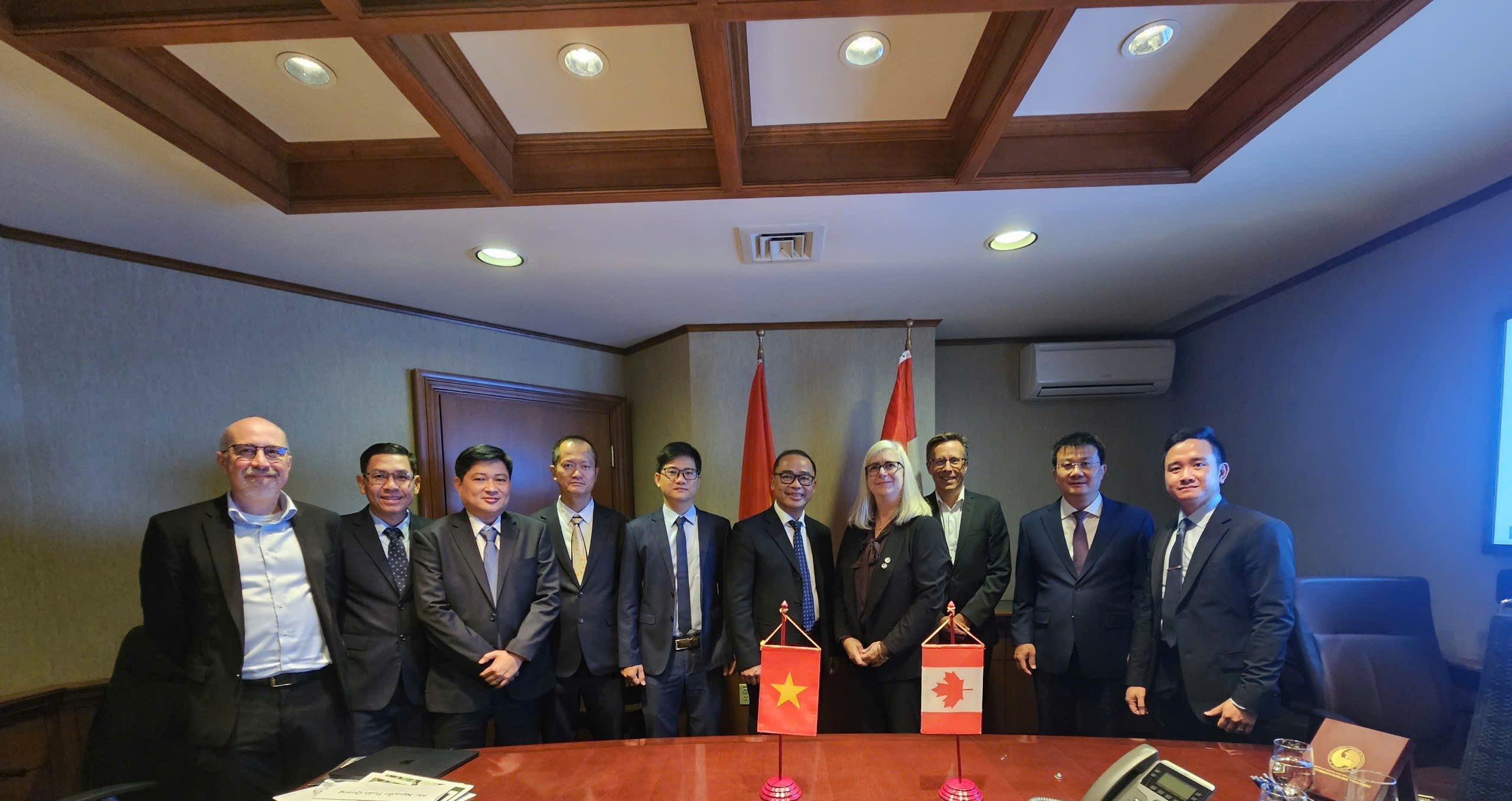
On September 25, the focus transitioned from high-level dialogue to tangible scientific and institutional collaboration.
Representatives from Viet Nam’s Ministry of Agriculture and Environment and Ho Chi Minh City University of Natural Resources and Environment met with IIES counterparts from Trent University, Université Laval, and the Institut National de la Recherche Scientifique (INRS). Discussions addressed shared priorities in climate change, environmental protection, critical minerals, education, and research. Trent University and Ho Chi Minh City University of Natural Resources and Environment formalized their collaboration by signing a Memorandum of Understanding, establishing a framework for talent development, international mobility, and joint initiatives.
Professor Huy Dang also spoke to His Excellency Tô Lâm and several ministers, emphasizing the opportunities to strengthen Canada–Viet Nam cooperation in two key areas: critical minerals and climate resilience.
On critical minerals, Professor Dang identified opportunities for collaboration in mineral extraction, separation, and refining technologies, as well as lower-emission processes, green chemistry, technology transfer, commercialization, and developing highly qualified personnel.
On climate change, Professor Dang emphasized collaborative research areas with measurable benefits, such as emissions monitoring, resource management, low-emission agriculture, and the circular economy. He proposed a practical approach in which partners conduct joint research, test solutions in Viet Nam, refine technologies based on outcomes, and scale successful methods.
This approach embodies a core principle of the IIES’s international work: scientific cooperation achieves the greatest impact when research expertise is integrated with local knowledge, training, institutional priorities, and defined pathways to implementation.
From Bilateral Cooperation to Regional Impact: The Proposal for APICRE
A central outcome of the scientific dialogue was the proposal to establish a dedicated international platform for climate resilience and environmental cooperation across the Asia-Pacific. During the meeting with His Excellency Tô Lâm, Professor Dang proposed establishing the Asia-Pacific Institute for Climate Resilience and Equity (APICRE).
APICRE is envisioned as an international institute headquartered in Viet Nam, with partnerships and influence throughout the Asia-Pacific region. Building on the IIES’s network and multidisciplinary expertise, the institute would bring together universities, research institutes, government agencies, communities, and industry to address climate resilience, environmental sustainability, and equity.
The proposed APICRE model is action-oriented. The institute integrates research, policy, capacity development, technology transfer, and implementation. It connects global science with Vietnamese leadership to deliver local climate solutions with broader regional impact.